
When considering the question of childhood well-being, I find myself aligned with the common worlds approach of ‘staying with the trouble’ (Haraway, 2008) of 21st century childhoods. This invitation entails remaining accountable to the ethical implications of living well with others in times of environmental degradation without turning away from the challenges.
I was honored to present at the Childhood and Materiality VIII Conference on Childhood Studies in Jyväskylä, Finland in May of 2018. The conference was offered by BIN Norden, a Nordic organization for child culture studies, which views children as social, local, and global participants, in partnership with the Finnish Society for Childhood Studies; a scientific organization that aims to promote multi- and interdisciplinary research on childhood and children. It was attended by scholars, educators and researchers from Finland, Norway, Sweden, Denmark, Iceland, Canada, and Australia. There were 3 attendees from the United States including myself.
While the theme of the conference was intentionally wide-ranging, a few motifs emerged from the presentations. A good deal of the research was grounded in posthumanist perspectives with an emphasis on new materialisms. Also present were post-constructivist childhood studies, digital materialities, multi-species childhoods, common worlds research, animal studies, and multimodal research approaches. My presentation was included in a symposium on posthumanist environmental education and addressed the question: What might be possible for environmental education if we were to reconceptualize waste materials as agential and ‘vibrant’ (Bennet, 2010) participants in a journey for sustainability rather than passive and innocent objects of it?
Another common thread in the conference was the issue of children’s well-being in complex 21st century childhoods.


As we know, many children live in material abundance, with access to technology and devices that have been designed to cater to them. These technologies in turn shape their neurological pathways, their thinking, and their identity. A global perspective of childhoods reveals a complex landscape where many children live in poverty with basic needs often going unmet. Uneven access and flows of material consumption are woven throughout childhoods, with the social lines that once distinguished material wealth and security completely obscured. Terms like “standard of living” lack meaning and no longer carry assurances of health or happiness.
Considering this landscape, the question of children’s well-being is a multi-faceted one. Ivar Frones (2014) from the University of Oslo presented at the conference on the well-being of children in what he terms as ‘the knowledge society.’ Well-being, as an open concept, invites discourse. Frones pointed out that in Norwegian, there is the concept of “feeling well,” but not of well-being.
He offered a common question among educators for our consideration: What is “the good life” for children in these complex times? Frones posited this is a subjective, multidimensional idea. He reminded us that Aristotle felt that well-being as the maximizing of pleasure is not viable, and that true happiness can only be found by doing what is worth doing.

Frones also argued that while being happy in the present is desirable for children, that having a viable future ought to be part of our overall concept well-being. He referred to this idea as the good life of the present and the good life of the future…”well-being” and “well-becoming.” He pointed out that material items are highly connected to satisfaction in the present, but have no bearing on a person’s future well-being. Frones went on to argue for children’s right to develop, and more importantly, to evolve. The right not only to “potential” (which implies economic achievement) but also for possibility. The right to be an active subject in one’s own socialization rather than an object; the right to participate. The opportunity to play. His research shows that these elements are more directly connected to children’s overall well-being than material access is.

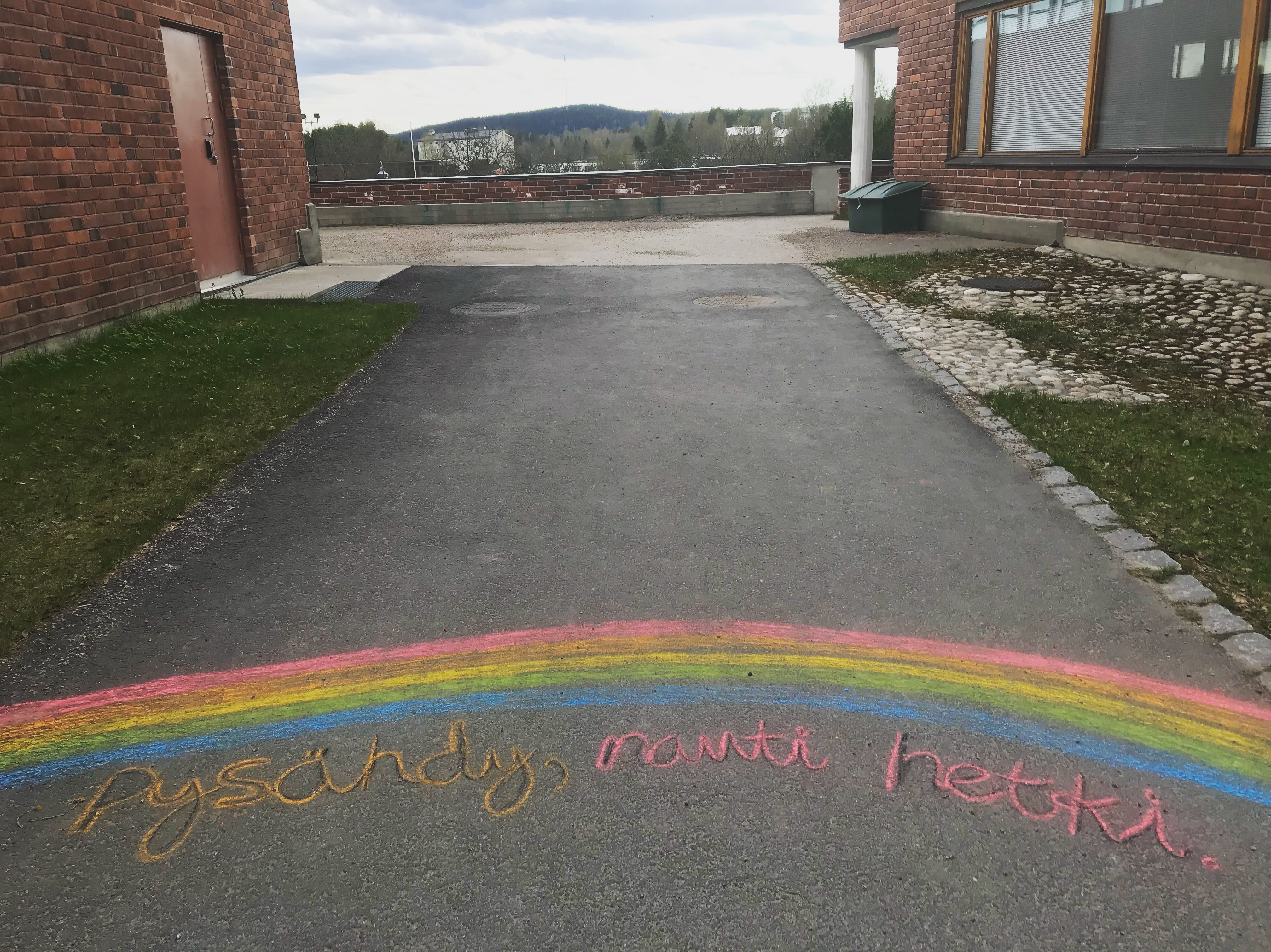

When considering the question of childhood well-being, I find myself aligned with the common worlds approach of ‘staying with the trouble’ (Haraway, 2008) of 21st century childhoods. This invitation entails remaining accountable to the ethical implications of living well with others in times of environmental degradation without turning away from the challenges. It pushes us to question our taken for granted notions and prized assumptions. Because the conference came from posthumanist and new materialist perspectives, the discussions were informed by a critical posthumanist ethics, in which there is a questioning of what is being made to matter and how that mattering affects what is possible to do and think (Barad, 2011). For me, this ethical consideration is the crux of what it means to live well with others in the common worlds that we share.


References
Barad, K. (2011) Posthumanist Performativity: toward an understanding of how matter comes to matter, Signs, 28(3), 801-831.
Ben-Arieh, A., Casas, F., Frønes, I., & Korbin, J. E. (2014). Multifaceted concept of child well-being. In Handbook of child well-being (pp. 1-27). Springer, Dordrecht.
Haraway, D. 2008. When Species Meet. Minneapolis: University of Minnesota Press.
 Dr. Angela Molloy Murphy